

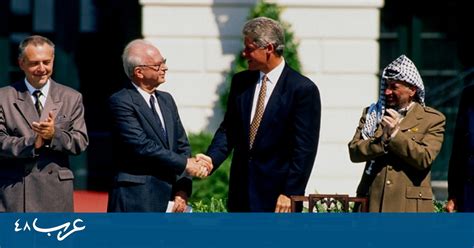
I Have a Dream: That Palestinians and Israelis May One Day Live in Peace and Love
By: Mohamed Badawi
“Peace is not the absence of conflict, but the presence of justice.” — Martin Luther King Jr.
Yes, I have a dream.
A dream that is no longer a luxury of thought or a poetic wish, but an existential necessity for all the peoples of this wounded region — a region worn down by blood, where pain has become a habit and death, daily bread.
I write today with full conviction that words, though powerless against the roar of tanks and the thunder of warplanes, remain the last refuge for those with a conscience — a window to a new horizon when all doors are closed.
My dream is for the people of Gaza to return to their homes, not to ruins. For fathers not to weep over their children under rubble. For massacres not to steal away mothers’ hopes for tomorrow. For the bodies of hostages to be returned to their families, and for the living to come back with as few scars as possible — life cannot be replaced, but it can be given new meaning.
From Gaza to Dresden: History Cannot Be Erased, but It Can Be Understood
When we see Gaza today — besieged and shattered — no conscious observer can help but recall the images of German cities after World War II, especially Dresden, which the Allies reduced to ashes in February 1945. Tens of thousands of civilians died in a few days. Churches, museums, and libraries — the collective memory of a people — were obliterated.
But what the Germans did after the war wasn’t driven by a desire for revenge. Instead, they chose to rebuild — not only infrastructure but their collective spirit.
West Germany opted for democracy, reflection, accountability, and the difficult road of acknowledging the catastrophe caused by Nazism. At the same time, Europe — led by France, which had itself been under Nazi occupation — chose reconciliation and partnership.
Former German Chancellor Willy Brandt once said:
“If you want to make peace, you must talk to your enemies, not your friends.”
And in 1989, when the Berlin Wall fell, it wasn’t just concrete that crumbled — ideas of hatred and division collapsed, and Germany was reunified with rare political courage in modern history.
From the Nakba to the Present: A Pain That Silence Cannot Heal
Palestinians know the Nakba as deeply as Germans know the Holocaust.
Every nation has its wounds, and every wound its memory. But memory cannot be an eternal prison. The Palestinian Nakba wasn’t only a mass expulsion — it was an uprooting, an erasure of identity.
But can Palestine wait another seventy years?
Can the region remain hostage to extremism and hate-fueled rhetoric?
Shall we continue to quantify suffering in numbers and justify killing with borders?
No. The solution does not lie in erasure, but in mutual recognition.
True peace begins from the heart of suffering.
South African leader Nelson Mandela once said:
“If you want to make peace with your enemy, you have to work with your enemy. Then he becomes your partner.”
Hamas Must Reflect, and Israel Must Reconsider
There is no noble resistance built on the blood of innocents.
And there is no genuine democracy that practices apartheid within its borders.
Hamas, through its violence and policies, has squandered many opportunities for the Palestinian cause.
And Israel, through its oppressive policies, undermines every real chance at peace — with continued settlement expansion and denial of basic Palestinian rights.
But amidst all this, we must not forget that there are people on both sides who seek peace, who fight for justice, and who refuse to become soldiers in the army of hatred.
Hope exists — fragile, perhaps, but still alive. It needs nurturing, not suffocation.
Europe Witnessed a Miracle — Why Can’t We Repeat It?
From the European Union to various partnerships, Europe has proven that yesterday’s enemies can become today’s allies.
Germany and France. Italy and Austria. Even post-Brexit Britain. All were soaked in the blood of the 20th century.
And yet today, Europe is the largest single market in the world — not because these nations suddenly loved each other, but because they placed shared interest above historical vengeance.
Why don’t we learn from this lesson?
Why don’t we build a “New Middle East” on justice and mutual respect — not on weapons and war deals?
Trump and the Compulsory Peace
Donald Trump may not be a traditional peacemaker, yet he forced both parties into a moment of reflection.
Hamas’s willingness to accept parts of the plan and to release hostages — even under pressure — is a step that should not be dismissed.
And Trump’s demand that Israel halt its military operation reflects a shift in the power dynamics.
The window may be narrow — but it is real.
In Conclusion: We All Have a Dream
I have a dream — that this region becomes a home for pluralism, not sectarianism.
That the Palestinian girl and Israeli boy may walk side by side — not in refugee camps or prisons, but in schools, playgrounds, theaters of life.
That history not be a sword hanging over our necks, but a bridge toward understanding and reconciliation.
As Mahmoud Darwish once wrote:
“We love life whenever we can find a way to it.”
Let us give life a chance. Let us restore the value of human dignity. Let our memory be a reservoir of wisdom — not fuel for destruction.

![Photo of Germanyʹs Islam debate [en]](https://int.almadayinpost.com/wp-content/uploads/2021/01/die_vom_zmo_organisierte_podiumsdiskussion-390x220.jpg)